Jordan Campbell · Director of Product Design & AI Operations at Inbox Health
Inbox Health
Building AI-powered billing solutions serving 2.5 million patients.
Senior UX Designer → Director of Product Design → Director of Product Design & AI Operations · 2023-Current · Inbox Health
Healthcare billing is broken—patients are confused, providers lose revenue, and manual follow-ups waste countless hours. At Inbox Health, I lead product design for patient payment experiences, optimizing every touchpoint from bill delivery to payment completion. Our AI-powered platform serves 2.5 million patients across medical practices.
Results
- Checkout conversion up 23%, above a 20% target.
- Checkout cut from six or seven steps to three on Stripe Payment Element.
- Stripe Elements test: +20.3% at the payment-method step, +7.7% more successful payments.
- The redesigned checkout roughly doubled AutoPay opt-in.
- Card reader relaunched after alpha fixes and grew to 17 practices.
- 50 automation flows save about 30 hours a month.
- 2.5M+ patients served.
The difficult part
What shaped the work
Patient-facing healthcare sets the rules: SOC 2 and HIPAA access controls, audit logs, two-factor login, and accessibility built into the designs themselves, including keyboard navigation and VoiceOver support.
Who I worked with
I was the sole product designer, so the work ran through engineering, product, sales, and support directly. I worked with engineers daily, gave sales preview apps for every call, and helped run hiring loops for a design intern and a product manager. I supervised our eight-week summer 2026 design intern, whose prototype moved into the production stack, and I run design critique frequently.
The Challenge
A Broken Billing Experience
Medical billing is notoriously confusing for patients. Bills arrive weeks after visits, insurance explanations are unclear, and payment options are limited. For providers, this means delayed payments, high call volumes, and significant revenue leakage. Inbox Health set out to fix this by creating a patient-first billing experience powered by intelligent automation.
Checkout
Six or seven steps down to three
I rebuilt patient checkout end to end on Stripe Payment Element. It went from six or seven steps to three: I removed required address verification and a gamified progress bar. We rolled it out to enterprise clients in stages and measured it in Google Analytics and Mixpanel. Payment conversion rose 23% across Quick Pay, guest checkout, and portal payments, above the 20% target. The redesigned checkout also roughly doubled AutoPay opt-in, compared with enterprises still on the old flow.
Testing the Payment Step
A controlled test before the rebuild
Before the rebuild, I tested Stripe Elements against our native card fields in a controlled test. Completion at the payment-method step rose 20.3%, and successful payments rose 7.7%. I then instrumented the new checkout with 16 named Mixpanel events and built the checkout board that product reviews run on. Building it, I found 237 events dropped at ingest, so I rebuilt the AutoPay board on true opt-in rates.
Card Reader
Its own case study
I designed a 0-to-1 card reader for the front desk on the Stripe S700. The first pilot did not scale, so we relaunched it on fixes from the alpha, and it grew to 17 practices. The full story is in the card reader case study.
AI Support
Its own case study
Since June 2024 I’ve designed AI and conversational features: LLM-suggested replies, AI call transcription, the customization for our AI support chat and AI phone calls, an in-app support assistant, and Voice AI configuration, with a person reviewing a response before it is sent. The full story is in the AI support case study.
API Documentation
Its own case study
I turned our partner API reference from a bare list of endpoints into documentation partners can build on, with a copy-for-LLM button. I wrote it, designed it, and built it in React. The full story is in the partner API docs case study.
Design System Leadership
Scaling Design Across Products
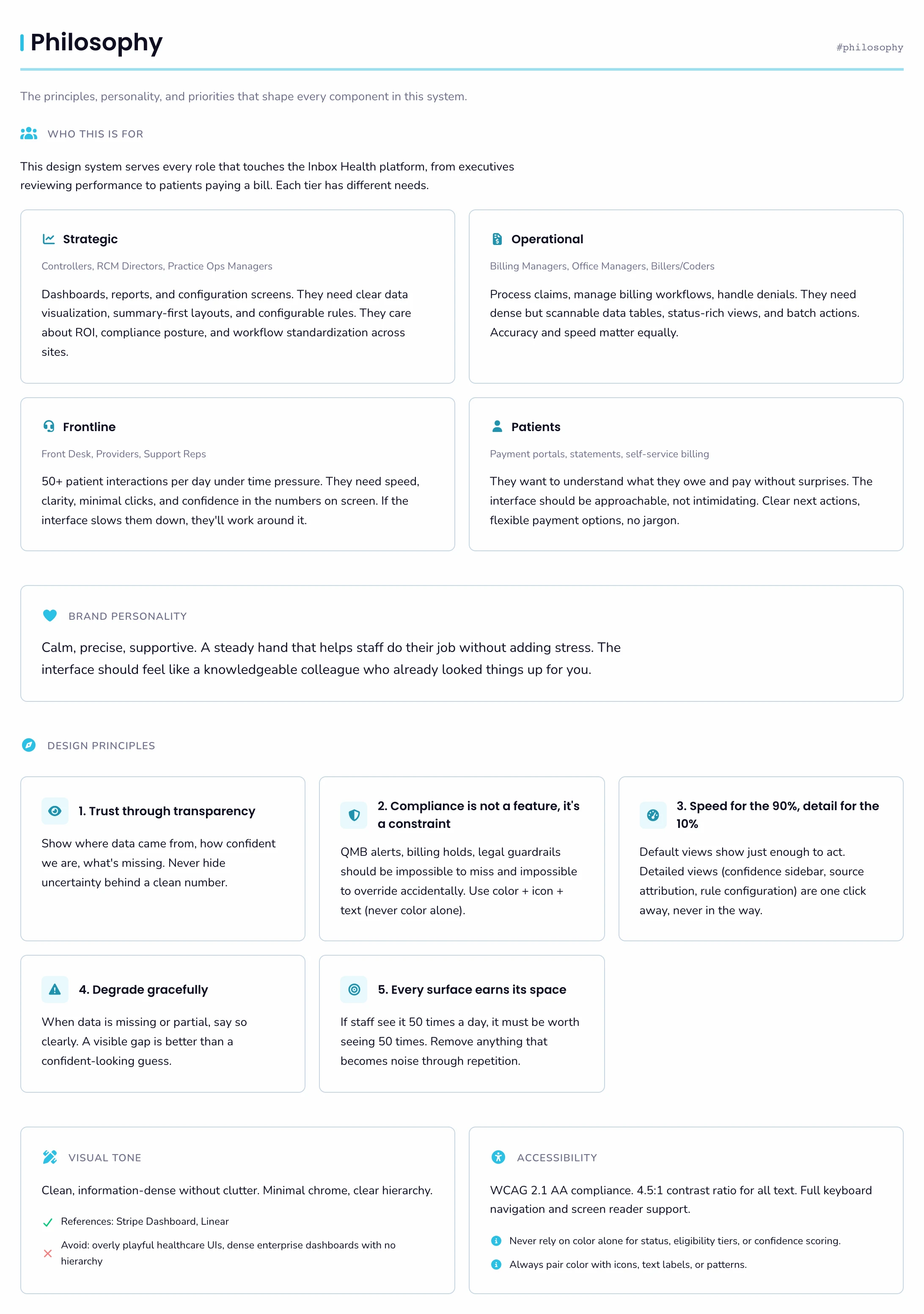
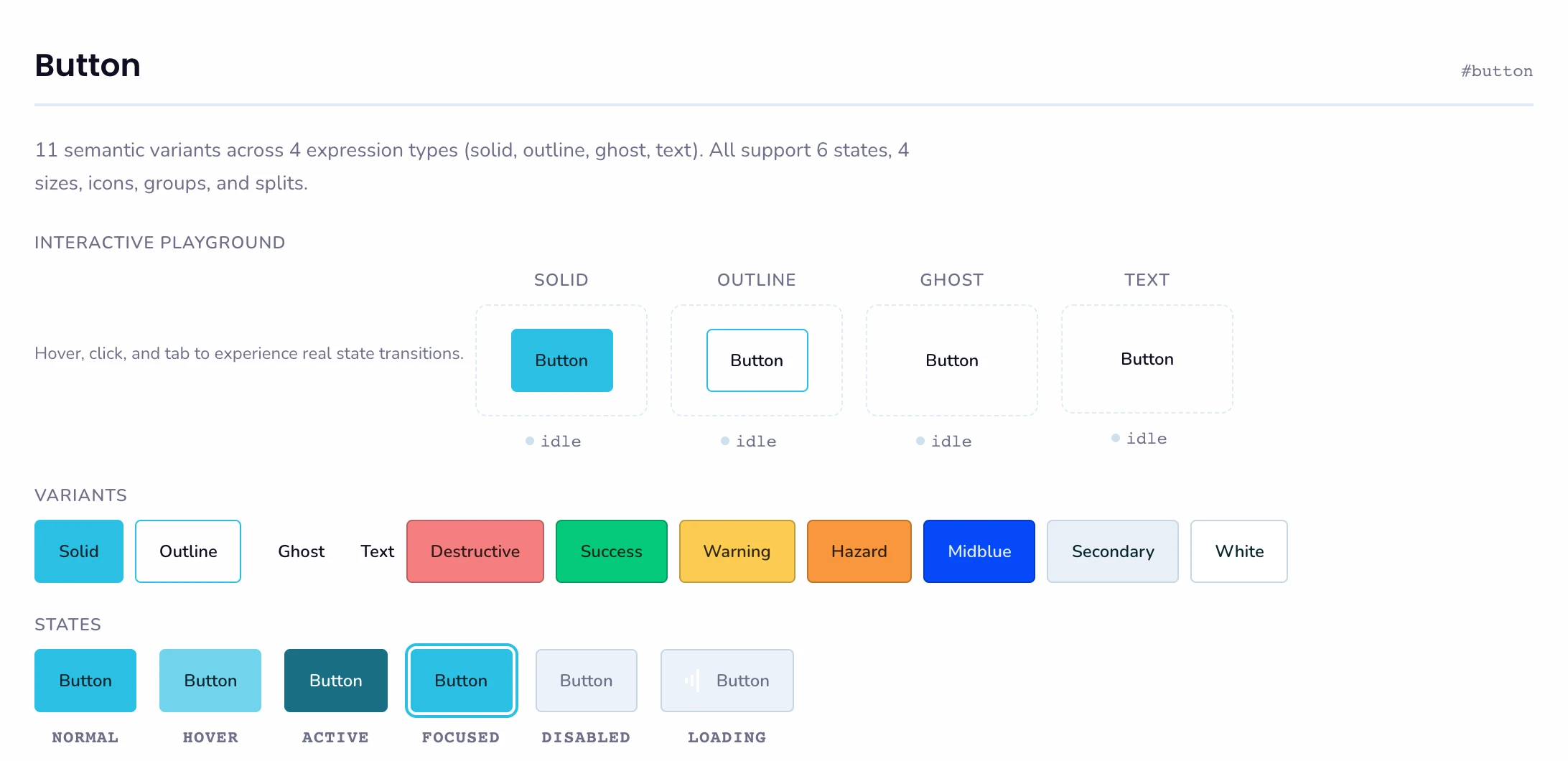
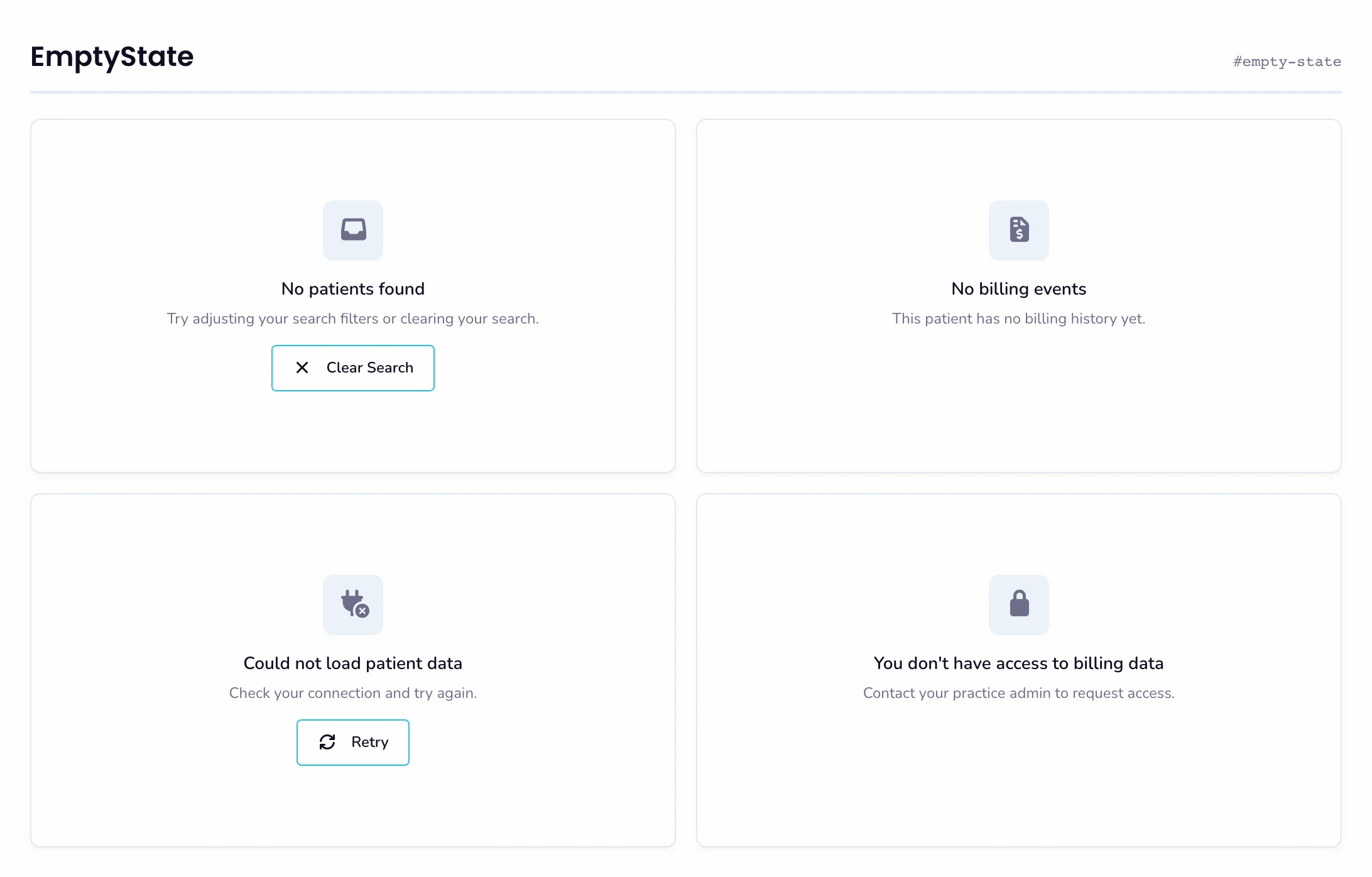
I built Inbox Health's design system in my first two months and maintain it, ensuring consistency across patient-facing applications, provider dashboards, and internal tools. I consolidated several scattered systems and the engineering library into one. The design monorepo has 10+ preview apps and demo presets. The sales team uses them in every sales call to demo the product in a predictable environment, and my inspection tool gives engineers copy-paste code, animations, SVGs, and icons.
Operations
Research on site, then automation
In May 2026 I led on-site research in Guatemala with our support team: 9 teammates shadowed across 14 sessions in two days, and 138 improvement opportunities logged. That research led to forming the product operations team and automating the tedious work it found. In one week I built 50 automation flows for recurring client reports that had been assembled by hand. They save about 30 hours a month so far, measured with ClickUp time tracking and the team's own reports.
Decision record
Replace static training with an in-app AI response tool
Client training was failing. One-pagers went unread.
- One-pagers: One-pagers went unread.
The decision: I built an AI response tool embedded in the app — users ask a question in natural language and get taken directly to the relevant feature.
Outcome: Replaced static docs. Users learn by asking, not reading.
Next case study: Inbox Health Card Reader